Ukraine Plans Major Shift Toward Contract-Based Military Service
President Zelensky confirms a transition to a contract-based army to address mobilization issues, aiming for high pay and fixed service terms funded by Western aid.
 Editor


By Ahmet Taş | Wise News Press
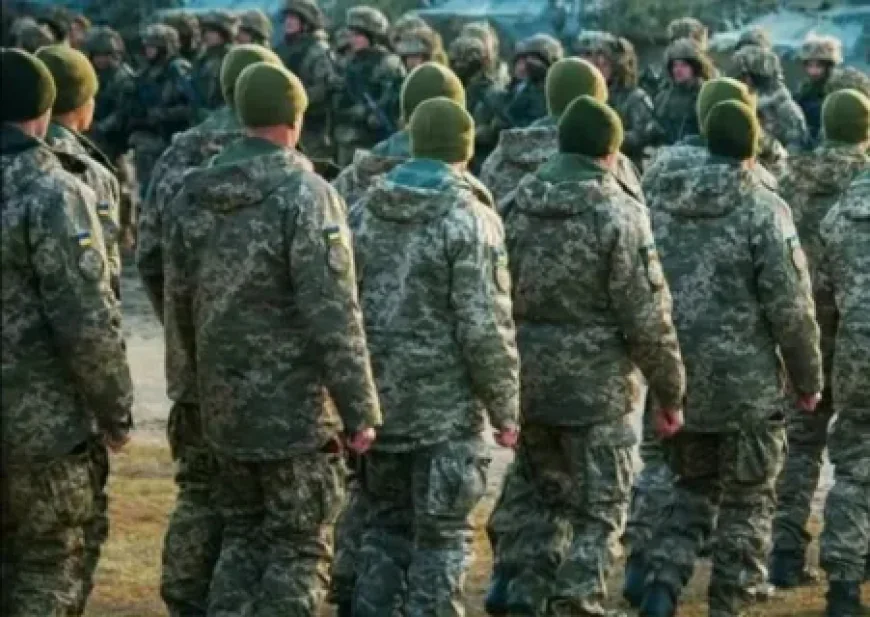
KYIV, UKRAINE — President Volodymyr Zelensky has officially confirmed intentions to transition the Ukrainian Armed Forces toward a contract-based model, signaling a radical shift away from current forced mobilization practices.
This strategic pivot is viewed by experts as an attempt to "release steam" from a societal atmosphere increasingly strained by the war's duration and current recruitment methods. According to official data, Ukraine currently faces approximately 2 million "dodgers," while cases of unauthorized absence (SZCH) are estimated to reach hundreds of thousands, forcing the leadership to reconsider its recruitment paradigm.
Addressing the Mobilization Crisis and "Bushification"
A significant marker in the government’s changing rhetoric is the official recognition of "bushification"—a term used to describe the forced, often violent, detention of citizens for mobilization. Previously dismissed as a product of Russian psychological operations (IPSO), the term has now entered official discourse as President Zelensky acknowledged the problem and tasked the new Minister of Defense, Mykhailo Fedorov, with resolving these systemic issues.
The leadership aims to shift the focus from coercion to voluntary professional service. This change is seen as essential for maintaining both military efficiency and social stability as the country enters a prolonged war of attrition.
Financial Incentives and the Billion-Euro "Carrot"
The proposed reform rests on significant financial restructuring to attract volunteers. The plan includes radical pay increases across various military roles:


-
Rear Support: Monthly pay is expected to rise to 50,000 UAH, representing a 2.5-fold increase over current levels.
-
Combat Pay: Monthly "battle pay" is slated to increase from 100,000 UAH to 150,000 UAH.
-
Signing Bonuses: The introduction of large one-time "lifting" payments for individuals signing new contracts.
However, this financial architecture faces a major hurdle: the budget. Zelensky has explicitly stated that Ukraine lacks sufficient internal funds to compete with the high contract payments offered by Russia and is looking toward European partners for financial assistance. The implementation of this "contract army" remains hostage to political negotiations, such as the EU's 90 billion euro credit currently facing blockages from Hungary.
Ending the Cycle of the "Eternal Soldier"
One of the primary deterrents for potential recruits in the current system is the indefinite nature of service. Currently, a soldier sent to the front often views it as a "one-way ticket" with no clear end date. To counter this, the reform proposes fixed terms, such as two-year contracts followed by a guaranteed one-year period of rest.
While popular with the public, the military command remains cautious about this proposal, fearing it could lead to a sudden vacuum on the front lines if too many soldiers are discharged simultaneously. As a pilot project, the government is considering specialized year-long contracts for drone operators, where the risk to life is lower than in assault units, potentially attracting "intellectual volunteers" back into service.
Internal Pressures and the Path Ahead
Despite these liberalizing intentions, a powerful lobby within Ukraine continues to advocate for harsher measures. Some military spokespeople argue against "contractization," calling instead for lowering the mobilization age and further stiffening punishments for dodgers. In extreme scenarios, there are suggestions that combat battalions should directly conduct mobilization themselves.
Ukraine now stands at a bifurcation point. If Western partners do not provide the necessary funding for a contract-based transition, and continued strikes on the energy sector further drain the national budget, the government will face a stark choice: continue forced mobilization at the risk of social explosion or admit that holding the front with current methods is unsustainable. Zelensky is betting on a "carrot" approach, but the funding for that carrot remains in Brussels.