



Ibrahim Kalin and the New MIT Doctrine: From Academia to the Pinnacle of Turkish Intelligence
An in-depth analysis of Ibrahim Kalin, the intellectual-turned-spymaster who is fundamentally reshaping Turkey's National Intelligence Organization (MIT) through a new doctrine of hybrid warfare and intelligence diplomacy.


By Yusuf İnan
Journalist | Political & Strategic Analyst
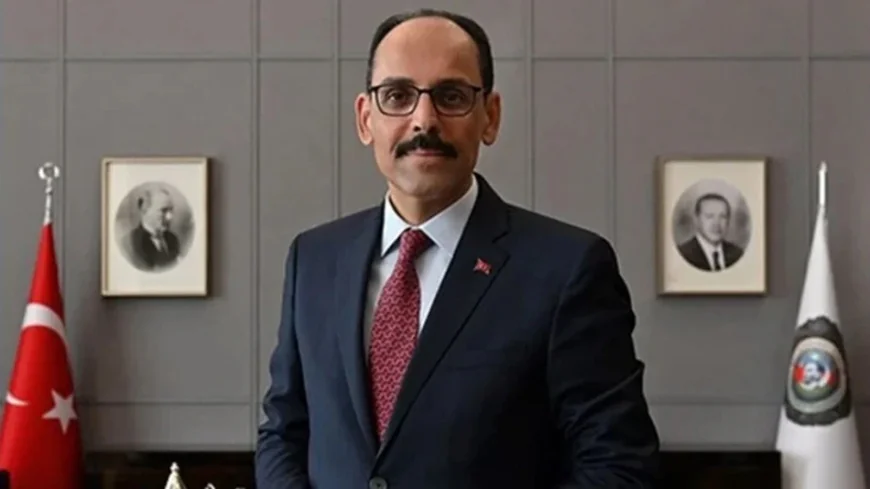
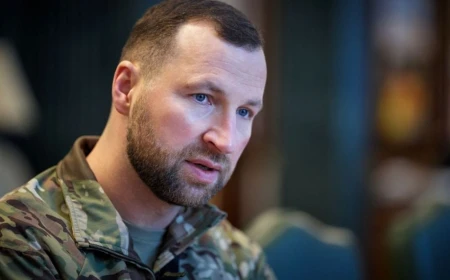
ANKARA, TURKEY — In an era where the geopolitical fault lines of the Middle East, Eastern Europe, and Eurasia are violently shifting, and the delicate boundary between traditional diplomacy and covert operations has become increasingly blurred, a highly unconventional profile sits at the apex of Turkey's national security architecture. Appointed as the President of the National Intelligence Organization (MIT) by President Recep Tayyip Erdogan on June 5, 2023, Prof. Dr. Ibrahim Kalin is not your quintessential spymaster. Instead, he is a profound intellectual with deep philosophical and historical roots, personally embodying the "soft power" of international relations while directing Ankara's most potent hard-power apparatus.
This comprehensive analysis charts Kalin's extraordinary trajectory from the academic corridors of Istanbul and Washington to the Presidential Complex, and ultimately to the shadowy realm of MIT. It examines Turkey's newly minted "intelligence diplomacy" strategy and the reverberations of this paradigm shift in both domestic and foreign policy. This is not merely the portrait of a bureaucrat; it is the blueprint of Turkey's strategic orientation in the 21st century.
An Intellectual Caught Between East and West: The Academic Foundations
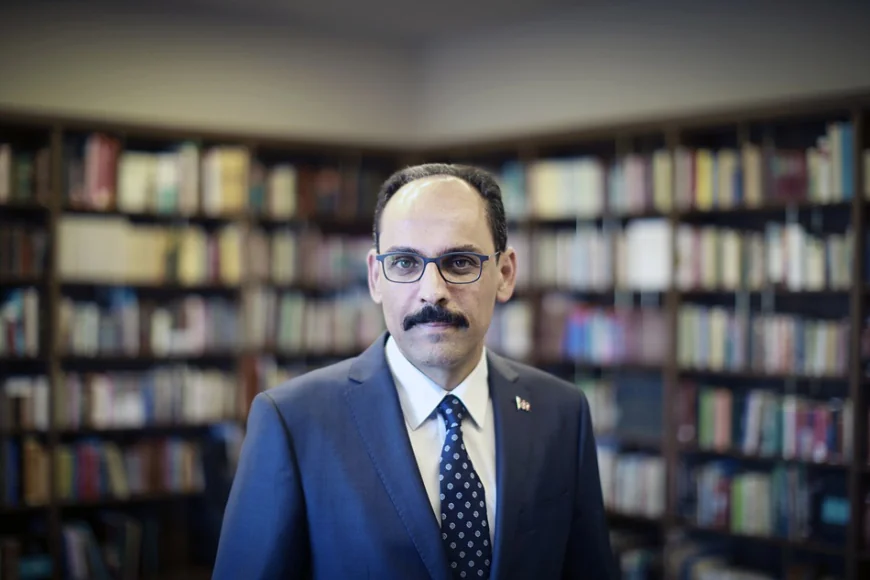
Born on September 15, 1971, in Istanbul to a family originally from the eastern province of Erzurum, Ibrahim Kalin's early career was far removed from the clandestine world of security bureaucracies. His narrative began amidst books, ancient texts, and philosophical debates. Graduating from Istanbul University's Faculty of Letters with a degree in History in 1992, Kalin rapidly expanded his academic horizons. He pursued his master's degree in Malaysia, delving deep into Islamic thought and philosophy, thereby mastering the intellectual frameworks of the East.


He then pivoted to the West, earning his Ph.D. in philosophy from George Washington University in 2002 with a formidable thesis on "Mulla Sadra's Theory of Knowledge." This unique synthesis of Eastern and Western intellectual traditions became the cornerstone of his future political and diplomatic lexicon. His subsequent academic tenures at Georgetown University, Bilkent University, and finally Ibn Haldun University—where he received his professorship in 2020—proved him to be a scholar eager to translate abstract thought into state practice.
Between 2005 and 2009, as the founding president of the Foundation for Political, Economic and Social Research (SETA)—a prominent Ankara-based think tank—Kalin became an indispensable advisor to Turkish policymakers. His published works, notably "Islam and the West," which won the Turkish Writers' Union Idea Award, cemented his reputation as a grand strategist capable of bridging civilizational divides.


From "Spokesperson" to Grand Strategist: The Presidential Years
Kalin's formal transition into the state bureaucracy accelerated in 2009 when he was appointed as the Chief Foreign Policy Advisor to then-Prime Minister Recep Tayyip Erdogan. This move signaled the initial fusion of academic intellect with statecraft. By 2010, he established the Prime Ministry's Office of Public Diplomacy, becoming its first coordinator and taking charge of managing Turkey's global image during a period of rapid economic growth and regional assertiveness.

However, the role that made him the most recognizable face of the Turkish state globally began in 2014 when Erdogan ascended to the Presidency. Appointed as the "Presidential Spokesperson" with the rank of Ambassador, Kalin spent nearly a decade at the forefront of the state's most critical announcements, sensitive diplomatic maneuvers, and high-stakes crisis management.
Simultaneously serving as the Deputy Chairman of the Presidential Security and Foreign Policies Council, he was positioned at the very heart of a strategy center operating in strict coordination with the Ministries of Foreign Affairs and Defense, as well as MIT. His fluency in English, Arabic, Persian, and French proved to be a rare and formidable asset, strengthening Turkey's hand in labyrinthine international negotiations from Washington to Moscow, and from Tehran to Brussels.
The New Doctrine of Intelligence: Hybrid Warfare and Diplomacy
June 5, 2023, marked a watershed moment for both Kalin's career and the trajectory of Turkish Intelligence. Taking over the helm of MIT from Hakan Fidan—who transitioned to the role of Foreign Minister—Kalin infused the organization with a sweeping new vision. The "2023 Annual Report," published in February 2024, serves as the manifesto of this new era.
In the report, Kalin underscored that MIT is no longer a classic agency solely focused on information gathering. It has evolved into an active, operational player executing "game-changing moves" in crisis zones such as Syria, Ukraine, Libya, and Nagorno-Karabakh. The true paradigm shift, however, lies in Kalin's conceptualization of "hybrid struggle" and "intelligence diplomacy." Under his leadership, MIT aims for the flawless integration of signal, electronic, cyber, satellite, and human intelligence. This technological supremacy has been coupled with pinpoint counter-terrorism operations, resulting in the neutralization of high-ranking PKK/KCK leaders in cross-border strikes, the extraction of FETO operatives from abroad, and the elimination of ISIS leaders, such as Abu Ibrahim al-Hashimi al-Qurashi.
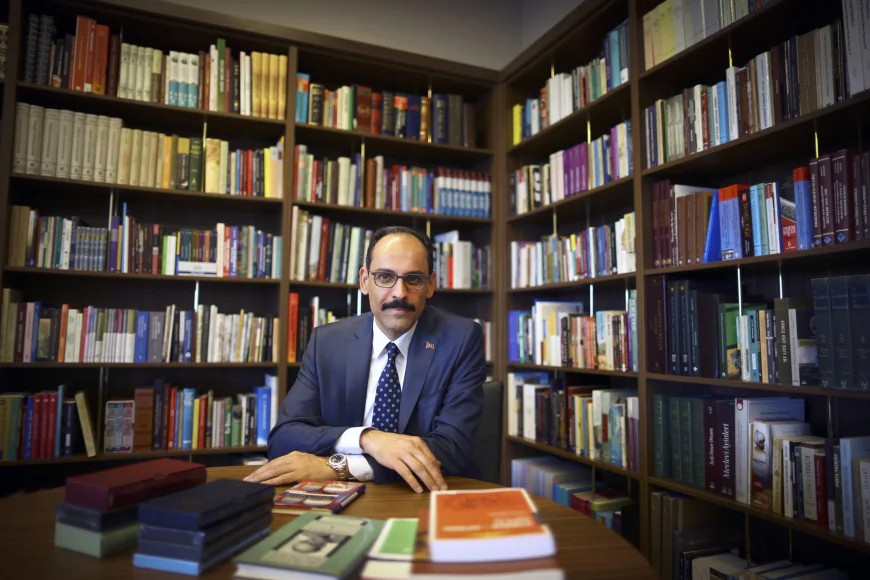
The MIT of the Kalin era does not merely fight on the battlefield; it is decisive at the negotiating table. From facilitating Palestinian-Israeli backchannels to spearheading regional peace initiatives, MIT now provides a critical "intelligence dimension" to the state's foreign policy, opening new conduits where traditional diplomacy hits dead ends. Speaking at the Strategic Communication (STRATCOM) Summit in March 2026, Kalin defined this approach as "a state reflex that accurately reads the line between friend and foe," perfectly summarizing how hard power and national narrative are now inextricably molded by intelligence.
High-Stakes Operations, Visits, and Fault Lines of Controversy
The office of the MIT President is inherently the epicenter of both monumental successes and profound controversies. During Kalin's tenure, cross-border operations against militant factions have intensified, projecting state authority forcefully across the region. His international engagements are equally striking. His January 2025 visit to Damascus and his July 2025 meetings with KDP and KRG leaders in Erbil demonstrated that MIT is functioning as the primary architect in resolving—or managing—deep-rooted regional conflicts.
Yet, this heightened visibility has invited intense scrutiny. Opposition media and political actors were quick to criticize diplomatic protocols during his January 2025 meeting with Hayat Tahrir al-Sham (HTS) leader Abu Mohammad al-Julani in Damascus, specifically pointing out errors in how the Turkish flag was displayed.
A far more explosive controversy erupted in March 2026. Photographs taken at a suhoor (pre-dawn Ramadan meal) attended by Kalin were widely shared on social media by members of the ruling AK Party's youth wing. The images inadvertently exposed the identities of several active MIT personnel. Given that Turkish law strictly penalizes journalists for publishing information regarding intelligence officers, the unpunished dissemination of these images by partisan youths ignited fierce debates over "double standards" and "institutional security vulnerabilities." Furthermore, statements hinting at a potential reassessment of the Kurdish peace process—relayed through journalists like Nevzat Cicek—have triggered sensitive political fault lines in domestic politics.
The Intellectual Spymaster of a New Era
The profile of Ibrahim Kalin fundamentally redefines the Western media's traditional archetype of a "Spymaster." That a man with over 2.8 million followers on X (formerly Twitter), renowned for his philosophical treatises and his skill in playing the traditional bağlama (lute), now runs one of the world's most operationally aggressive intelligence services illustrates the multi-dimensional nature of Turkey's modern statecraft.
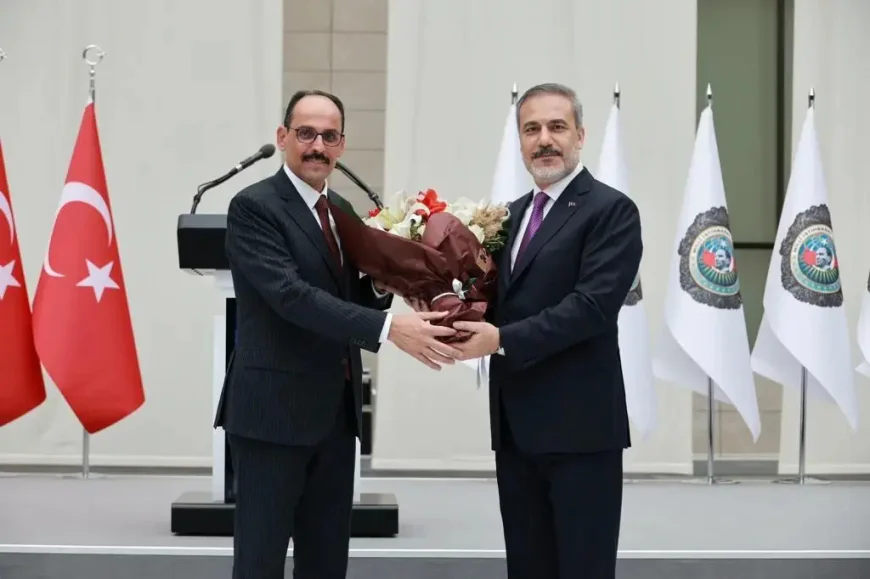
Following Hakan Fidan's legacy of transforming MIT into a formidable operational force, Ibrahim Kalin's mandate is widely interpreted as evolving that force into a sophisticated instrument of global diplomacy and strategic communication. While domestic criticisms, debates over parliamentary oversight (such as the limited powers of the TBMM Security and Intelligence Commission), and operational leaks present inevitable hurdles, Kalin's MIT is poised to be the "hard core of the soft power" that not only protects Turkey's borders but actively scripts its global narrative.
This journey—from academic to bureaucrat, from spokesperson to chief of intelligence—is a definitive indicator that Ibrahim Kalin will remain one of the most compelling and influential playmakers not just in Turkey, but on the regional and global geopolitical chessboard for years to come.
Yusuf İnan
www.wisenewspress.com
Yusuf İnan is a journalist and author. He serves as Editor-in-Chief of WiseNewsPress.com, SehitlerOlmez.com, and YerelGundem.com, and specializes in strategic and political analysis of Turkish and global affairs.
What's Your Reaction?
 Like
0
Like
0
 Dislike
0
Dislike
0
 Love
0
Love
0
 Funny
0
Funny
0
 Wow
0
Wow
0
 Sad
0
Sad
0
 Angry
0
Angry
0

Editor | Wise News Press — Delivering accurate, timely global news with integrity, insight, and editorial responsibility.














Comments (0)