Kristal Oil CEO Christopher Delogh laid to rest in Izmir
Kristal Olive Oils CEO Christopher Delogh was memorialized at Izmir's historic Dominican Church, attended by prominent business and political figures.
 Editor


By Ahmet Taş | Wise News Press
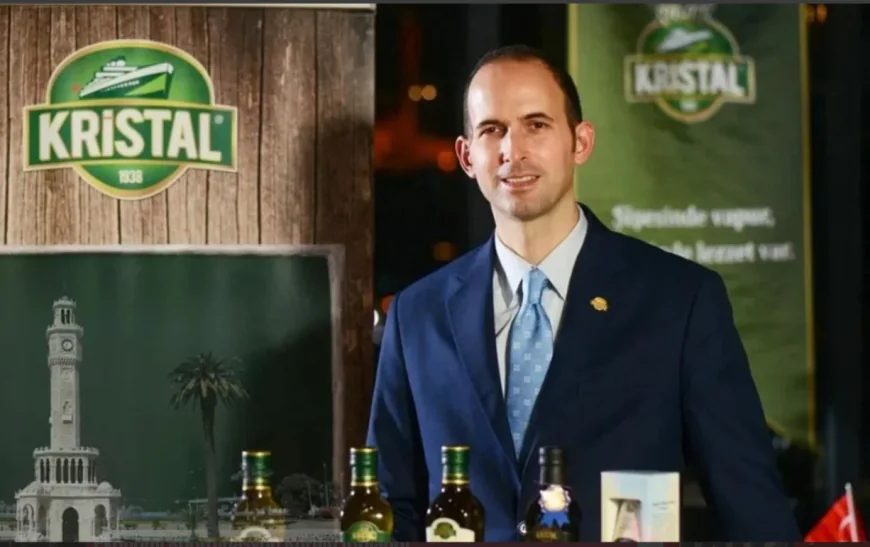
IZMIR, TURKEY — Christopher Delogh, the CEO of Kristal Olive Oils, has been laid to rest at the historic Dominican Church in Alsancak following his passing from cancer at a young age.
The ceremony, held at the church locally known as San Rosario, drew a significant congregation of Turkey’s business, political, and social elite, highlighting the deep connections within Izmir’s multicultural community.
High-profile attendance
The funeral service served as a major gathering for Izmir’s prominent figures. Among those paying their respects were Arkas Holding Chairman Lucien Arkas, Özel Türk College Manager Yiğit Tatış, CHP Izmir MP Murat Bakan, former Konak Mayor Hakan Tartan, and business leaders Reşat Akbaykal and Sabri Çolakoğlu.
The church was filled to capacity, with many attendees accompanied by their families. The service, described as a flawless execution of the Rito Delle Esequie (Rite of Funerals), marked a solemn farewell to the young business leader.
A historic venue
The ceremony took place under the "DOM" (Deo Optimo Maximo) inscription of the Dominican Church, a structure that serves as a cornerstone for the Catholic Levantine population in the region. According to historian Alex Baltazzi, the church, officially named San Rosario, remains the most active Catholic church in Alsancak, frequently hosting baptisms, weddings, and funerals.


While the Dominican friars first appeared in Izmir in the 14th century, their permanent settlement dates back to the early 18th century. After a fire destroyed their previous monastery in 1845, the community purchased the current land in 1857 from the Braggiotti family.
Architectural and artistic heritage
The current structure was commissioned after the previous St. Pietro e Paolo church proved too small for the growing congregation. Designed by architect Luigi Rossetti and inaugurated in 1903 as "Madonna del SS. Rosario," the project cost 120,000 francs at the time, including the bell tower and marble altars.
Reflecting a neoclassical style, the church houses significant artworks, including a painting of the Madonna del Rosario by 19th-century artist Morgari and a wooden statue crafted by Giuseppe Marengo in 1921. The garden also features a memorial dedicated to Italian soldiers who fell during the First and Second World Wars.