



Mykolaiv Mayor Oleksandr Sienkevych: Leadership in times of war
From an IT specialist to a wartime crisis commander, Mayor Oleksandr Sienkevych navigates Mykolaiv through a severe water crisis and historic reconstruction.


By Yusuf İnan
Journalist | Political & Strategic Analyst
Mykolaiv Mayor Oleksandr Sienkevych: Leadership in times of war
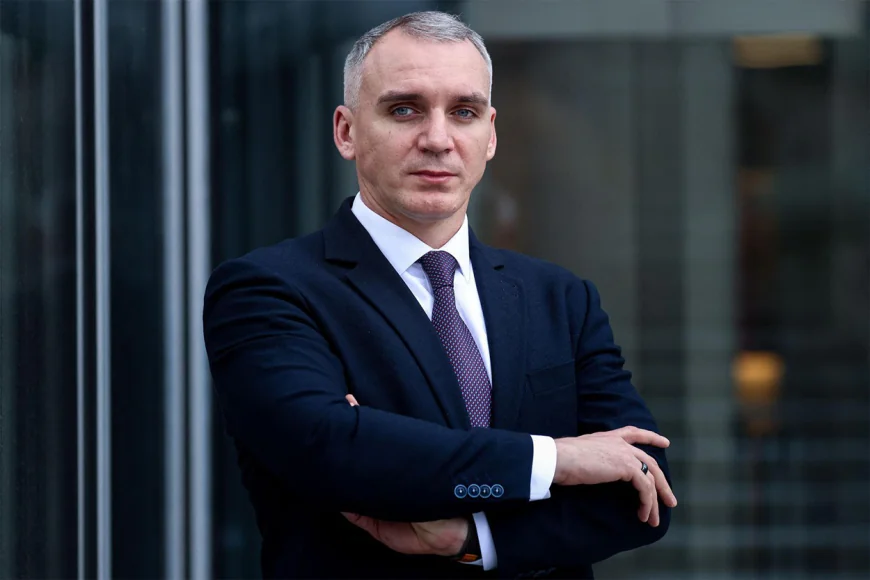
MYKOLAIV, UKRAINE — Mykolaiv Mayor Oleksandr Sienkevych has carved out an extraordinary leadership profile, evolving from a seasoned information technology specialist into a wartime crisis commander navigating one of Ukraine's most critical frontline cities since taking office in 2015.
Following the full-scale Russian invasion in February 2022, the southern port city of Mykolaiv was thrust into the brutal center of the conflict. The collapse of vital infrastructure, particularly a severe and prolonged water crisis, deeply tested the city's resilience. Through strategic crisis management, the establishment of highly transparent governance mechanisms, and the forging of robust international partnerships, Sienkevych has emerged as one of the most prominent and effective figures in Ukrainian local politics. Having survived a controversial impeachment by the city council in 2017, returning via a court ruling, and winning a decisive re-election in 2020, his political journey serves as a fascinating microcosm of local democratic resilience and civilian defiance under extreme wartime conditions.
From the IT sector to academic and political prominence
Oleksandr Sienkevych was born on February 4, 1982, in Mykolaiv. Coming from a multicultural family background with a Bulgarian father and a Moldovan mother, his educational and professional journey is a testament to an analytical mindset that later defined his mayoral tenure. After graduating from the Petro Mohyla Black Sea National University in 2004, Sienkevych continued his academic pursuits in the capital. In 2007, he earned a master's degree in computer science from the Institute for Applied System Analysis at the prestigious Kyiv Polytechnic Institute.


Before stepping into the political arena, Sienkevych built a highly successful career entirely focused on the IT and private sectors. He worked as a computer graphics instructor, served as a founding executive at the tech firm "KvadrOlogik," and held technical director positions at enterprises such as "Blink Reaction" and "Leda." According to data published by Forbes Ukraine, this technology-based background formed the very foundation of the data-driven and transparent governance approaches he later adopted in municipal administration.
Maintaining his commitment to academic development, the mayor earned his "kandidat" degree—equivalent to a Ph.D.—in economics in 2020. His dissertation, which focused on the transformation of regional economic systems in the context of the digital economy and society, is registered in the National Repository of Academic Texts of Ukraine (NRAT), proving his deep theoretical grounding in digitalization and urban economics. Married to Kateryna and a father to Maria and Maksym, Sienkevych has also been consistently praised for his transparent financial records in Ukraine's electronic asset declaration system.


Political turbulence, impeachment, and the 2020 victory
Sienkevych’s rapid rise in the local political scene began with the 2015 local elections. Running as a candidate supported by the "Samopomich" (Self Reliance) party, election data reported by Ukrinform showed him narrowly making it to the second round with 25,904 votes, trailing behind his rival Igor Dyatlov, who secured 44,764 votes. However, according to data from the independent election monitoring network OPORA, Sienkevych pulled off a massive upset in the runoff on November 15, 2015. He increased his vote count to 80,636, capturing approximately 54.9 percent of the total ballots cast, and successfully claimed the mayoral seat.
His first term, however, was fraught with political crises and local coalition struggles. In October 2017, the Mykolaiv City Council deemed his performance insufficient and passed a vote of no confidence, resulting in his temporary removal from office. While Tetiana Kazakova was appointed as the acting mayor, Sienkevych launched a fierce legal battle. Justice prevailed in 2018 when a court ruling officially reinstated him to his post.
Having parted ways with Samopomich in 2018, the mayor entered the 2020 elections as the candidate for the newly formed "Propozytsiya" party. Official results announced on November 25, 2020, confirmed his enduring popularity; he secured 54,411 votes, or 59.74 percent, comfortably defeating his opponent Vladyslav Chaika and securing a powerful second mandate just before the darkest chapter in Ukraine's modern history began.
The 2022 Russian invasion and a city's fight for survival
Mykolaiv became one of the most formidable strongholds on the southern front during the full-scale Russian invasion. It was during this terrifying period that Sienkevych transitioned from a traditional infrastructure-focused mayor into a wartime crisis commander. Frequently cited as a primary source by international news outlets like Reuters, Sienkevych became the global voice of Mykolaiv, issuing warnings about incoming missile strikes, coordinating civilian evacuations, and reporting on blast damages throughout 2022.
His communication strategy during relentless bombardments—especially following the devastating March 29, 2022, strike on the regional administration building—was instrumental in keeping the city's morale intact. His wartime leadership did not go unnoticed by the central government in Kyiv. On June 18, 2022, during a high-risk visit to the city, Ukrainian President Volodymyr Zelenskyy awarded state honors for bravery to both Sienkevych and Regional Military Administration Head Vitaliy Kim, cementing their status as national symbols of resistance.
The infrastructure catastrophe: Destruction of the Dnipro pipeline
The heaviest blow dealt to Mykolaiv during the war was the deliberate destruction of the Dnipro water pipeline on April 12, 2022, which had historically supplied the city with fresh water. Left entirely without centralized drinking water for weeks, and facing insufficient groundwater reserves, the city stood on the brink of a massive humanitarian disaster.
*
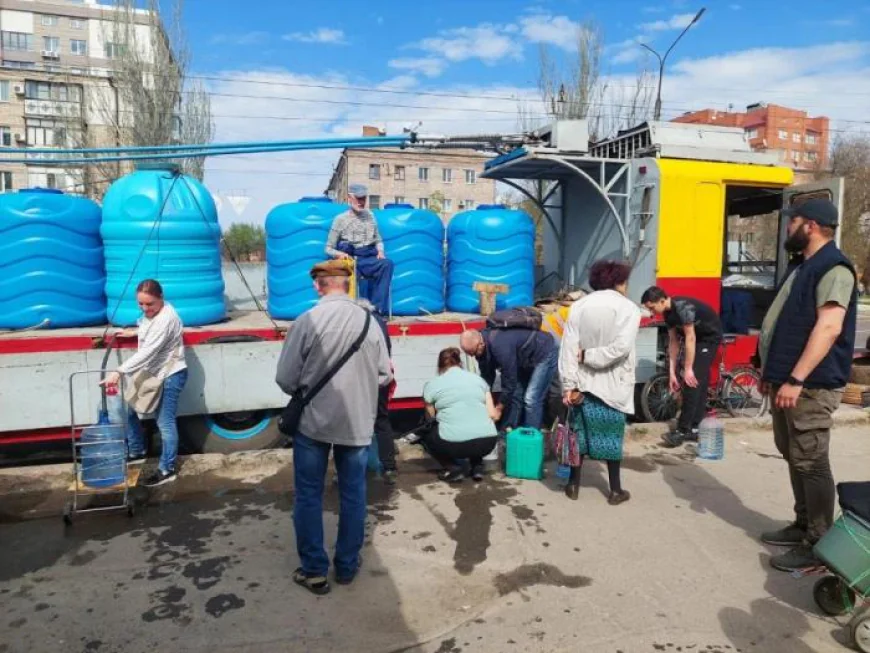
Acting swiftly, Sienkevych ordered the immediate drilling of emergency wells at local hospitals. To prevent the collapse of the city's sewage and sanitation systems, the municipality made the difficult but necessary decision to pump salty water from the Southern Bug river into the municipal grid. While this corrosive saltwater severely damaged pipes and home appliances, it was a tragic necessity to maintain basic hygiene.
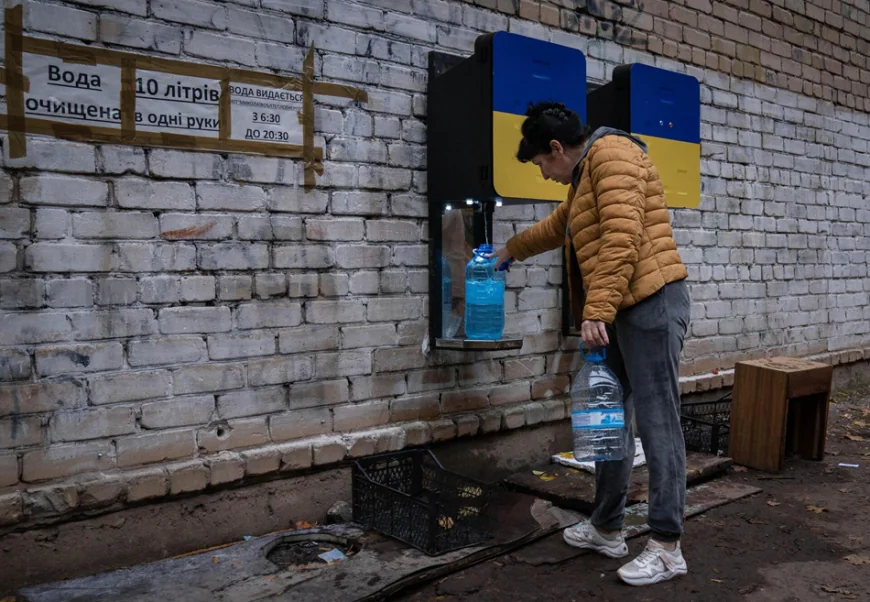
To address the desperate need for clean drinking water, the municipality launched the "Dostupna voda" (Affordable Water) program. Free purified water was distributed to the public through reverse osmosis purification points established across the city. Budget reports indicate that the program has become a vital lifeline, with 80.7 million UAH allocated for 2025 and 100.5 million UAH planned for 2026, covering the maintenance and operation of 145 critical purification systems.
A historic 6.3 billion UAH mega-pipeline project
As the war raged on, a colossal infrastructure initiative was launched in coordination with the Ministry for Development of Communities and Territories and the State Agency for Restoration to solve the city's water crisis permanently. Initially estimated at 8.7 billion UAH, the cost of the new main water pipeline was successfully optimized to 6.3 billion UAH through rigorous feasibility studies and efficient project management.
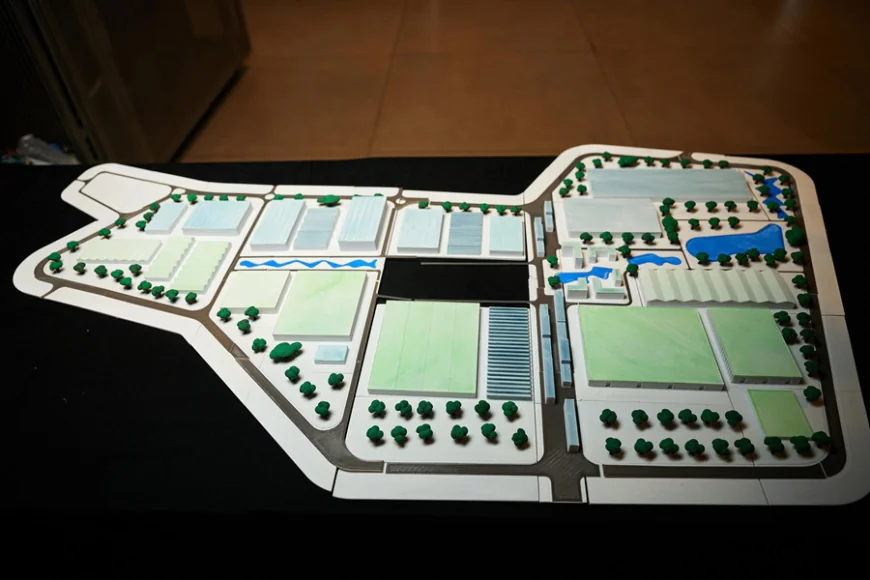
The massive project consists of two pipeline routes totaling approximately 136 kilometers. Designed to withstand the realities of war, the project includes underground cable networks and specialized bomb shelters for operational staff. According to statements by Prime Minister Yulia Svyrydenko, the new pipeline will provide a daily capacity of 120,000 cubic meters for households and 50,000 cubic meters for agricultural irrigation. While raw freshwater is expected to reach the city by August 2025, modern treatment facilities equipped with automated quality control systems are scheduled to become fully operational by the spring of 2026, finally returning safe tap water to the residents.
International partnerships and the Denmark model
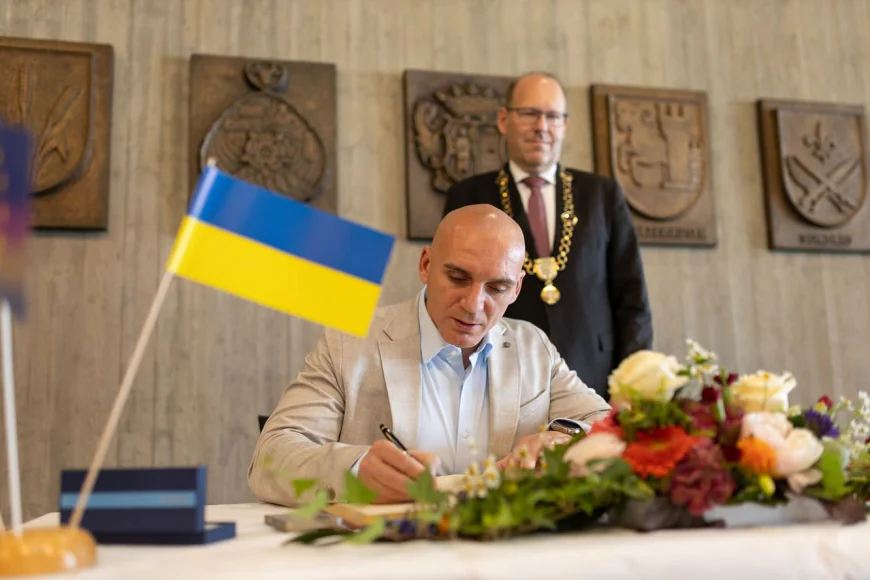
The strongest pillar of Sienkevych's wartime strategy has been the establishment of international partnerships rooted in absolute transparency. The partnership model built with Denmark is currently showcased as a gold standard across Ukraine. Under a Memorandum of Understanding (MoU) signed on March 8, 2023, Denmark provided massive support to Mykolaiv in the areas of water restoration, the construction of school bomb shelters, and the revitalization of local businesses. In December 2022 alone, Denmark delivered 50 reverse osmosis systems, which were ingeniously utilized to provide both drinking water and clean water for the city's winter heating grid to prevent pipe corrosion.
Furthermore, a "Mykolaiv Strategic Partnership" project, jointly financed by the United Nations Development Programme (UNDP) and Denmark covering the years 2025-2028, boasts a budget exceeding $36 million. This program aims to strengthen local governance and trigger rapid economic recovery. Additionally, the Nordic Environment Finance Corporation (NEFCO) is providing up to 13.4 million EUR in grant support to reduce non-revenue water losses in the city's battered network.
Transparency, accountability, and the post-war vision
Selected as a "partner city" by the EU Anti-Corruption Initiative (EUACI), Mykolaiv applies the highest standards of accountability in utilizing foreign aid. Through the "MykolaivAid" portal launched by the municipality, every piece of donor support—from heavy-duty generators to basic humanitarian packages—is tracked and shared transparently with the public. The fact that internal audit reports continually show zero violations proves the success of Sienkevych's strategy in attracting and maintaining international donor confidence.
Elected to the board of the Global Covenant of Mayors for Climate & Energy in 2023, Sienkevych is already preparing the city's post-war master plan in accordance with international standards. Working alongside the UNECE, the municipality envisions a reborn city featuring modern industrial parks, innovation hubs, and expansive green spaces. Under the steady and tested leadership of Oleksandr Sienkevych, Mykolaiv is not just a city resisting a brutal war; it is laying the groundwork to rise from the ashes as a modern, transparent, and resilient European metropolis.
Yusuf İnan
www.wisenewspress.com
Yusuf İnan is a journalist and author. He serves as Editor-in-Chief of WiseNewsPress.com, SehitlerOlmez.com, and YerelGundem.com, and specializes in strategic and political analysis of Turkish and global affairs.
What's Your Reaction?
 Like
0
Like
0
 Dislike
0
Dislike
0
 Love
0
Love
0
 Funny
0
Funny
0
 Wow
0
Wow
0
 Sad
0
Sad
0
 Angry
0
Angry
0

Editor | Wise News Press — Delivering accurate, timely global news with integrity, insight, and editorial responsibility.










Comments (0)